Vibe Coding and the Future of Web Development
What Vibe Coding Is
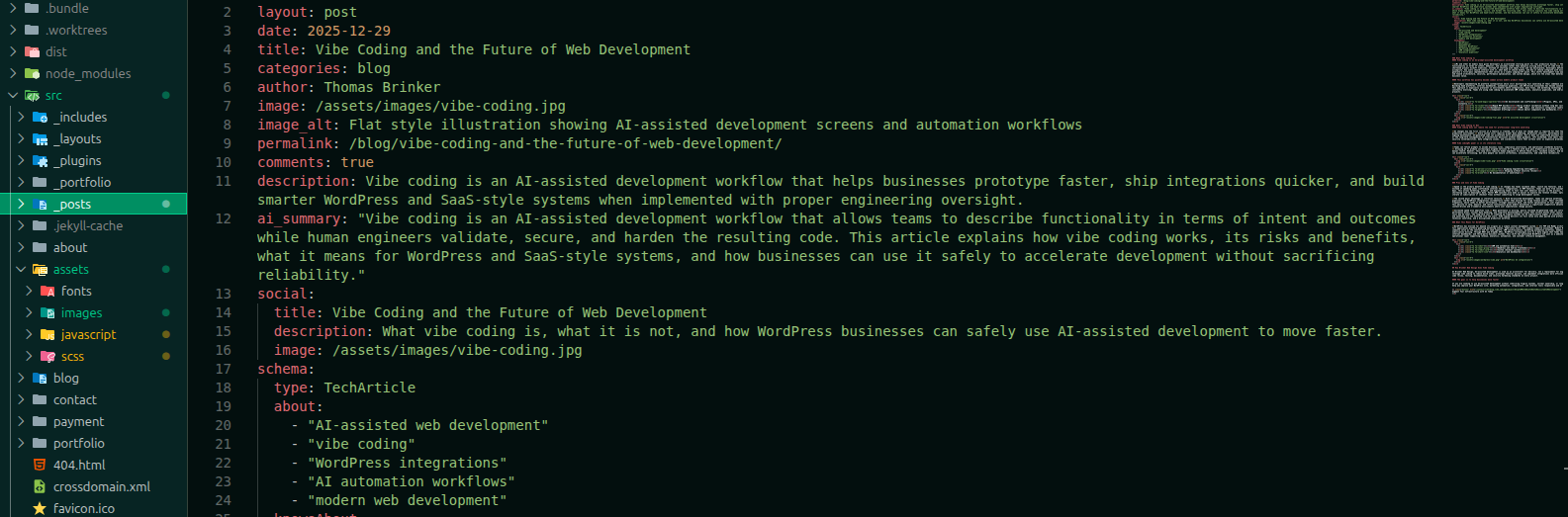
Vibe coding is an AI-assisted development workflow
LLMs and other AI models have given developers an accelerated starting point for real production builds. The ability to describe functionality in terms of intent, behavior, and outcomes rather than manually writing every line of code from scratch has significantly shortened project kickoff timelines. Instead of starting with empty files and raw boilerplate, developers define what a feature should accomplish, how users should interact with it, what data it should handle, and how it should integrate with existing systems. AI tools then generate a first pass implementation that serves as a viable jumping off point. This shifts development time away from repetitive scaffolding and toward architecture, security, performance optimization, and system design, which are the areas that determine long-term reliability and business value.
This workflow has quietly become common across modern product teams
Developers implementing AI platform customization while still maintaining full ownership of their codebase are ahead of the curve. Building SaaS platforms, internal dashboards, automation pipelines, and API-driven ecosystems has become synonymous with modern AI workflows. This approach is especially prevalent in environments where integrations, data flows, and marketing technology stacks are complex and constantly evolving. Teams are using vibe coding to accelerate CRM integrations, analytics pipelines, and end-user systems across their projects.
- AI boilerplate and scaffolding
Plugins, APIs, and service layers generated instantly. - Rapid MVP builds
Early product validation without long dev cycles. - Automation pipelines
CRM, email, and analytics integration layers. - Component drafting
Block editor components and dashboards.
What Vibe Coding Is Not
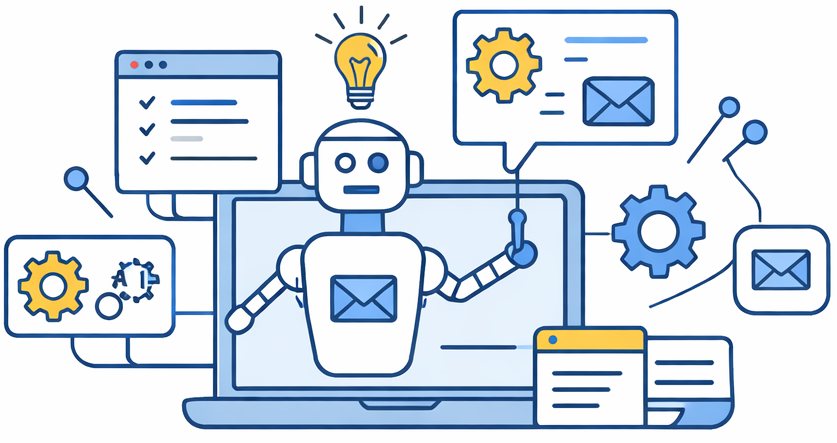
Vibe coding does not remove the need for professional long-term ownership
AI changes how the first version of a feature is created, but it does not change what is required for that feature to survive in a production environment. Every system still requires proper data modeling, permission controls, performance tuning, documentation, and ongoing maintenance. AI-generated code can accelerate early development, but it does not understand business rules, regulatory requirements, or the long-term consequences of architectural decisions without human guidance. Left unchecked, even small features can quietly introduce security vulnerabilities, data integrity issues, and scalability limits that surface later as expensive problems.
Vibe coding’s power is in its iterative loop
Teams can refine prompts to encode business rules, compliance constraints, and operational standards directly into the generation process. Allowing AI to produce increasingly aligned versions of a feature with each pass dramatically accelerates iteration cycles and reduces manual rework. However, this loop still requires human engineers to define those rules, validate outputs, and own the resulting system. AI can accelerate versioning, but only people can ensure correctness, accountability, and long-term reliability.
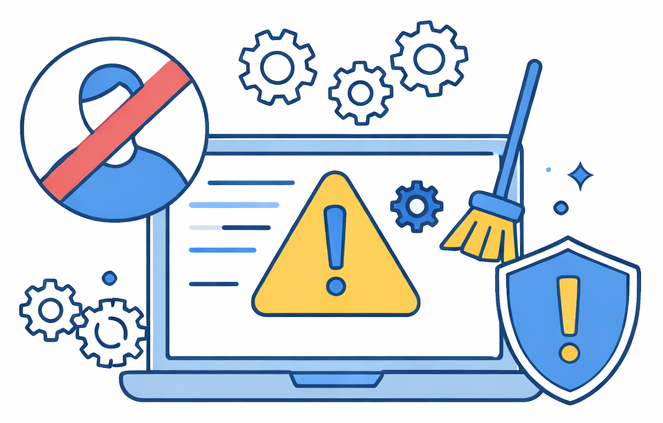
- Skipping engineering oversight
- Shipping without security review
- No documentation or ownership
Pros and Cons of Vibe Coding
Speed is the primary benefit of vibe coding. It changes how teams validate ideas, launch new features, and respond to market feedback. Instead of spending weeks scaffolding internal tools, integrations, or MVP features, teams can move from concept to working prototype in days. This allows marketing, product, and engineering teams to test real user behavior earlier in the process, reducing guesswork and shortening time to meaningful data. Faster MVP launches also make it easier to explore new revenue streams, optimize conversion paths, and iterate on subscription or checkout flows without committing to large development cycles.
The second major advantage is iteration velocity. With AI-assisted development, teams can improve workflows, dashboards, automation pipelines, and WordPress integrations incrementally rather than waiting for large release cycles. Small refinements can be deployed more frequently, which leads to better performance, stronger analytics data, and faster optimization of user experience and conversion funnels. This ability to ship, measure, and refine continuously gives modern businesses a significant competitive advantage, especially in content-driven and e-commerce environments where user expectations change quickly.
Increased speed also amplifies risk. When governance is missing, poorly reviewed AI-generated code can introduce security gaps, performance bloat, unclear data handling, and long-term maintainability issues that surface months after launch. While early development costs may be lower, the long-term cost of cleaning up fragile systems can be significantly higher if architectural standards, documentation, and ownership are not enforced from the start. Vibe coding delivers its full value only when paired with professional oversight, clear technical ownership, and a disciplined production workflow.
What This Means for WordPress
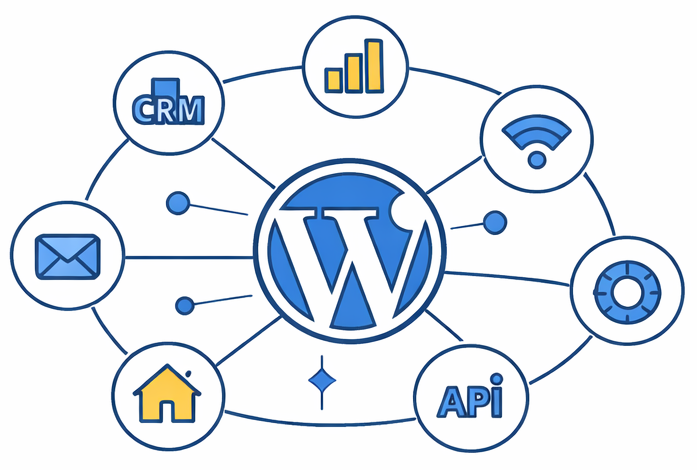
WordPress has evolved far beyond its origins as a simple content management system. Its PHP and MySQL architecture can now function as a full application platform powering marketing stacks, SaaS-style tools, and complex commerce ecosystems. Modern WordPress implementations commonly serve as the central hub for lead capture, CRM synchronization, marketing automation workflows, membership management, and subscription billing. Through REST and GraphQL APIs, WordPress increasingly acts as a data engine that feeds headless frontends, mobile apps, internal dashboards, and third-party business systems. This shift has positioned WordPress not just as a website builder, but as an operational layer supporting revenue, analytics, automation, and customer lifecycle management.
- CRM and automation hub
- Headless and hybrid frontends
- Custom checkout systems
- Analytics and dashboards
How Brinker Web Design Uses Vibe Coding
At Brinker Web Design, AI-assisted development is used as an accelerator for delivery, not a replacement for engineering discipline. We leverage vibe coding to reduce build times, prototype features quickly, and implement integrations more efficiently, while still enforcing code review, testing, documentation, and security hardening standards on every project.
The goal is to help businesses move faster
If you are looking to use AI-assisted development without inheriting fragile systems, unclear ownership, or long-term technical debt, we can help you improve your WordPress site, marketing automation, integrations, and internal tools responsibly and at production quality.