Baseline and Cap Height, Serif Don't Like It
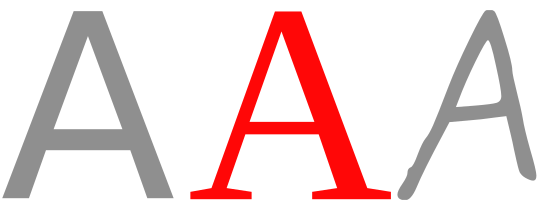
Serif Fonts Are Back (But Use Them With Purpose)
For years I was firmly in the Helvetica-or-bust camp. Give me Helvetica Neue Bold on a clean layout and I’m happy, predictable, modern, and always legible. Sans-serif fonts dominated digital design for good reason: early screens were low-resolution, rendering engines were inconsistent, and serif fonts often looked muddy on anything smaller than print.
But things have changed. Dramatically.
High-density screens, better font rendering, and broader web-font support have made serif typography a viable and often beautiful choice in modern web design.
Why Serif Fonts Are Trending Again
A post from @krla_cook on HubSpot’s Marketing Blog put it perfectly:
“Due to screen resolution limitations and an overall lack of online font support, designers avoided serif fonts for years to keep websites legible and clean. With recent improvements, serif fonts are having a big moment and they’ve never looked more modern.”
Serifs bring warmth, elegance, and personality qualities that bold, neutral sans-serif type doesn’t always capture. Brands looking to differentiate themselves visually are leaning into serif display fonts, mixing them with sans-serif body copy to create contrast and hierarchy.
And now, with helpful tools like:
- Font Joy – AI-powered pairing suggestions
- Font Pair – curated Google Font combinations
…exploring typography has never been easier.
Just remember: algorithmic pairing isn’t the same as thoughtful design judgment.
Good Typography Still Requires Intent
As @poppiepack writes on Canva:
“There’s a science to applying a heading, subheading and body copy to suit the type of content you’re producing and the message or tone of your brand.”
That’s the heart of it.
Serif fonts can be stunning when used intentionally in headlines, editorial layouts, hero statements, brand moments. But used without purpose, they can:
- reduce readability
- clash with established UI patterns
- create visual noise
- feel out of place in product-driven interfaces
In short: serifs are back, but they’re not a free-for-all.
My Own Typography Preferences
My design history leans heavily toward sans-serif typography. Clean, modern, predictable. It works for most marketing and business sites, and it’s a big reason I continue to reach for Helvetica Neue Bold.
But the serif resurgence has me experimenting more:
On the right project with the right branding and intention, a well-chosen serif headline can elevate the entire visual experience.
Just don’t expect me to give up Neue Bold anytime soon. Some habits die hard.
Want Help Improving Typography or Design on Your Site?
Strong typography isn’t decoration, it’s structure, hierarchy, and brand voice.
If your site’s type system feels dated, inconsistent, or unclear, I can help you improve it.
Ready for a professional redesign or typography audit?
Improve My Website’s Typography